Oops! Something went wrong while submitting the form.
How to Use AI for Market Research and Competitive Analysis in 2026
Spending weeks on market research? AI agents can do it in hours. Step-by-step guide to automated competitive analysis, SERP tracking, and trend monitoring.
Sai opens competitor websites, LinkedIn profiles, product pages, review sites, and news sources in your browser. It extracts pricing changes, product updates, hiring signals, customer reviews, and content strategy shifts -- then compiles everything into a structured Google Sheet with timestamps, source URLs, and change-over-change comparisons.
Automated SWOT and Trend Analysis
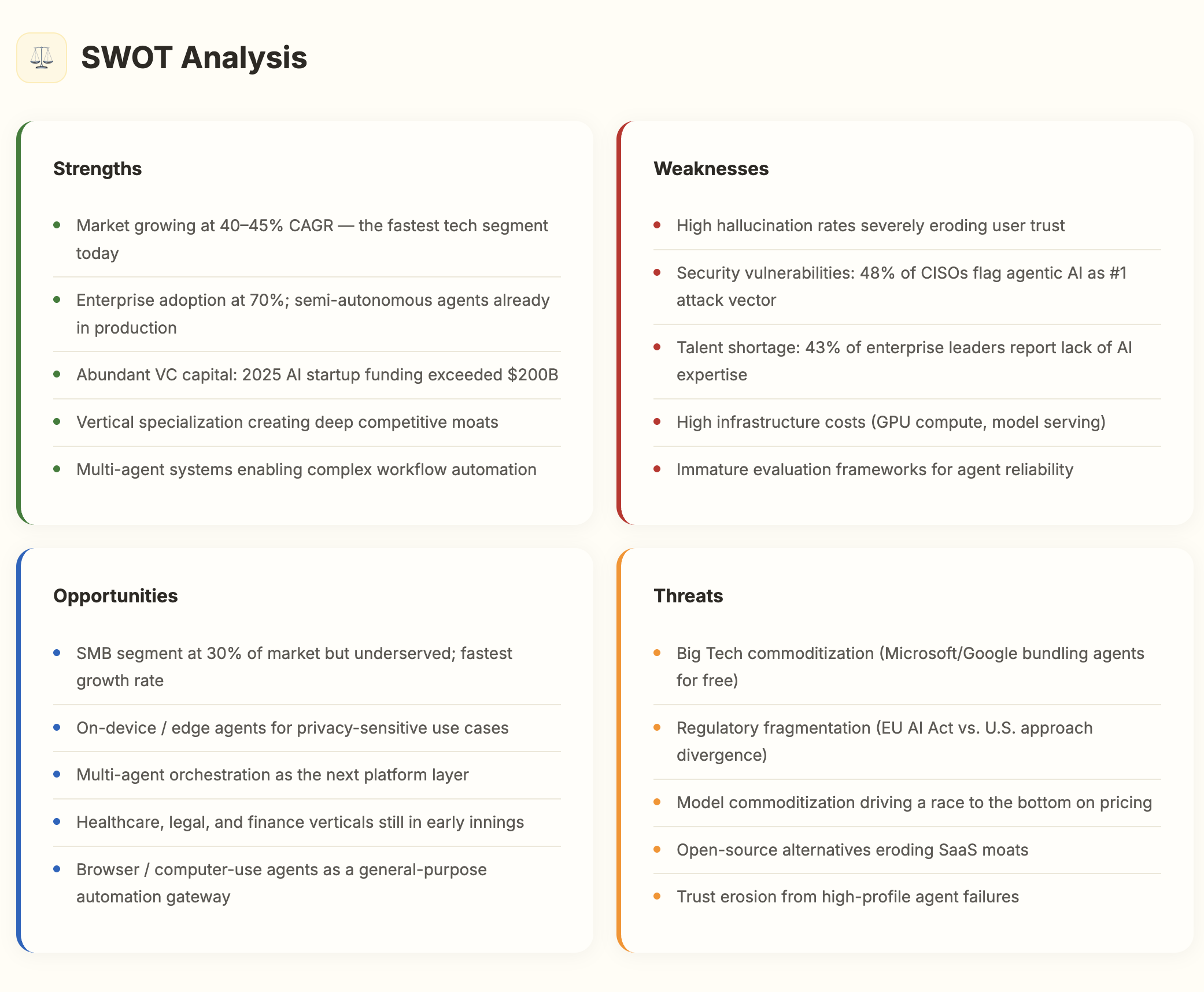
Sai searches across Google, Reddit, X, industry publications, and analyst reports simultaneously. It identifies recurring themes, sentiment patterns, and emerging trends -- then synthesizes findings into an actionable intelligence dossier with SWOT matrices, market sizing estimates, and strategic recommendations.
Research-to-Action Pipeline
The intelligence Sai gathers flows directly into your sales workflow. Competitor positioning data enriches your lead prospecting profiles. Industry trend insights sharpen your outreach messaging. Meeting briefs pull the latest competitor moves before every call. One research session feeds weeks of downstream action.
The disconnect is not a lack of tools. It is that most AI market research tools solve only one piece of the puzzle:
They monitor but do not analyze. Tools like Klue and Crayon track competitor website changes, but the interpretation -- what does this pricing shift mean for our positioning? -- still falls on a human analyst reviewing alerts one by one.
They analyze but do not connect to action. Platforms like AlphaSense and Statista provide powerful data access, but the insights stay locked in dashboards. They never reach the sales rep preparing for tomorrow's call or the marketer writing next week's outreach sequence.
They cover one channel but miss the full picture. Social listening tools watch X and Reddit. SEO tools track keyword movements. Review aggregators monitor G2 and Capterra. But nobody stitches the signals together into a unified competitive view -- because doing so manually across five platforms takes an analyst two to three days.
What Is an AI Market Research Tool?
An AI market research tool is software that uses artificial intelligence to automate one or more stages of the market research process: data collection, competitive analysis, trend identification, consumer insight extraction, or report generation. These tools range from narrow-purpose applications (social listening, survey analysis, keyword tracking) to end-to-end platforms that handle the entire research workflow.
The six core capabilities of AI market research tools:
Automated data collection -- scraping competitor websites, product pages, pricing tables, job boards, and review sites at scheduled intervals without manual input
Multi-source intelligence aggregation -- pulling signals from search engines, social media, news outlets, SEC filings, patent databases, and industry reports into a unified view
Competitive benchmarking -- tracking competitor positioning, feature sets, pricing strategies, and content output over time with change detection
Trend and sentiment analysis -- identifying emerging themes, shifting customer sentiment, and market opportunities from unstructured text across platforms
Automated report generation -- synthesizing raw data into structured deliverables: SWOT analyses, market sizing estimates, competitive matrices, and executive summaries
Research-to-workflow integration -- feeding intelligence outputs directly into sales tools, CRM systems, content calendars, and outreach sequences
Most AI market research tools on the market today handle capabilities one through three. Very few handle four and five well. Almost none handle six -- the critical link between research and revenue. This is where autonomous agents like Sai differentiate: the research output does not stay in a dashboard. It flows directly into your lead enrichment pipeline, your outreach templates, and your pre-meeting briefs.
How to Automate Market Research and Competitive Analysis with AI (Step-by-Step)
Step 1: Define Your Competitive Intelligence Framework
Before touching any tool, define exactly what intelligence you need and why. Most automated market research fails not because the technology is inadequate, but because teams start collecting data without a clear framework for what decisions the data should inform.
Structure your framework around four intelligence categories:
Competitive positioning -- how do competitors describe themselves, price their products, and differentiate their features?
Market signals -- what are customers saying on review sites, Reddit, and social media about your category?
Industry trends -- what emerging technologies, regulatory changes, or market shifts could create opportunities or threats?
Sales intelligence -- what specific competitor data does your sales team need to win deals?
Sai helps structure this by creating a Google Sheet template with tabs for each intelligence category, pre-populated with the data fields you need to track, update frequency targets, and source URLs. This becomes your living competitive intelligence dashboard.
Step 2: Map Your Competitive Landscape
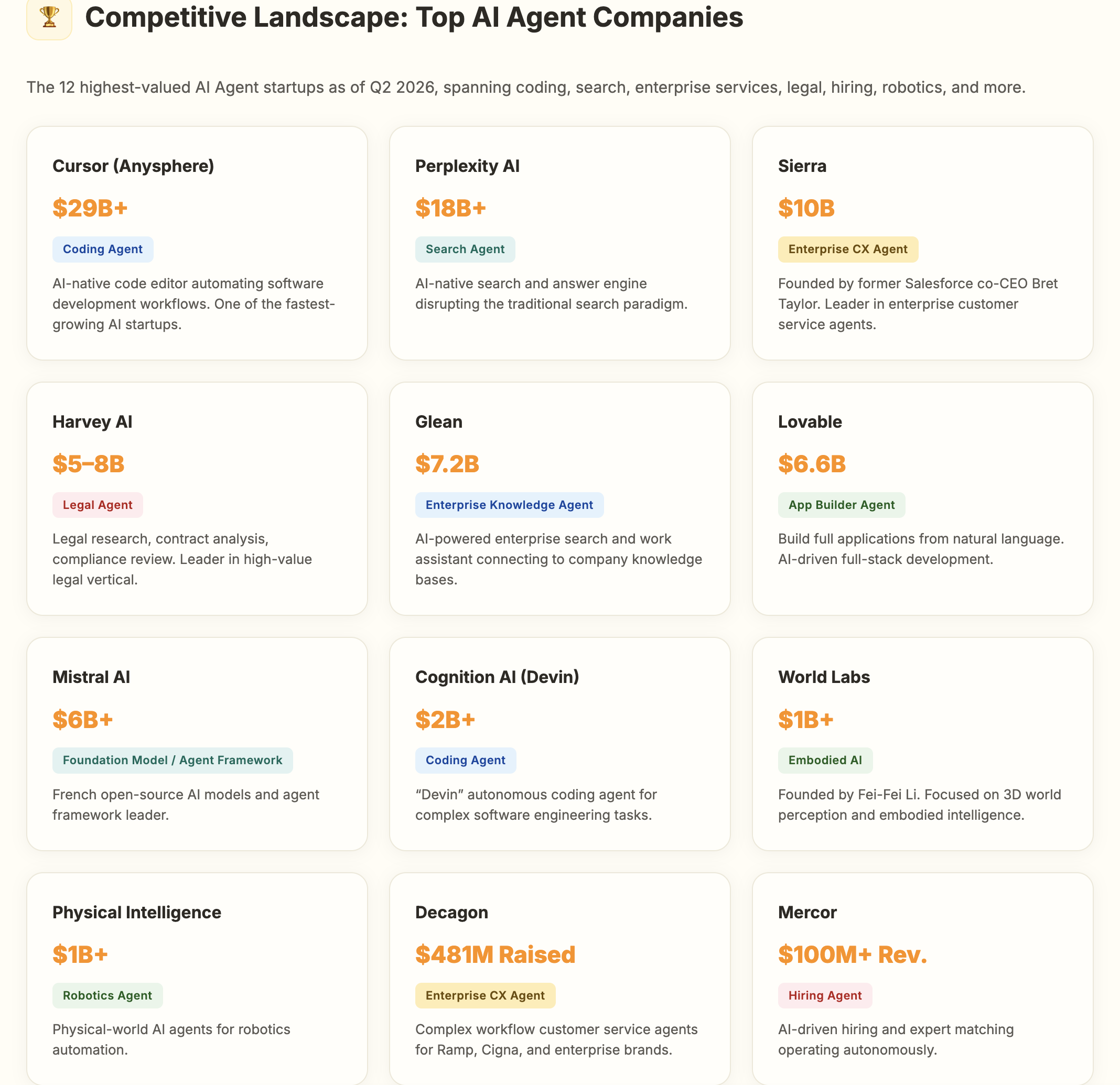
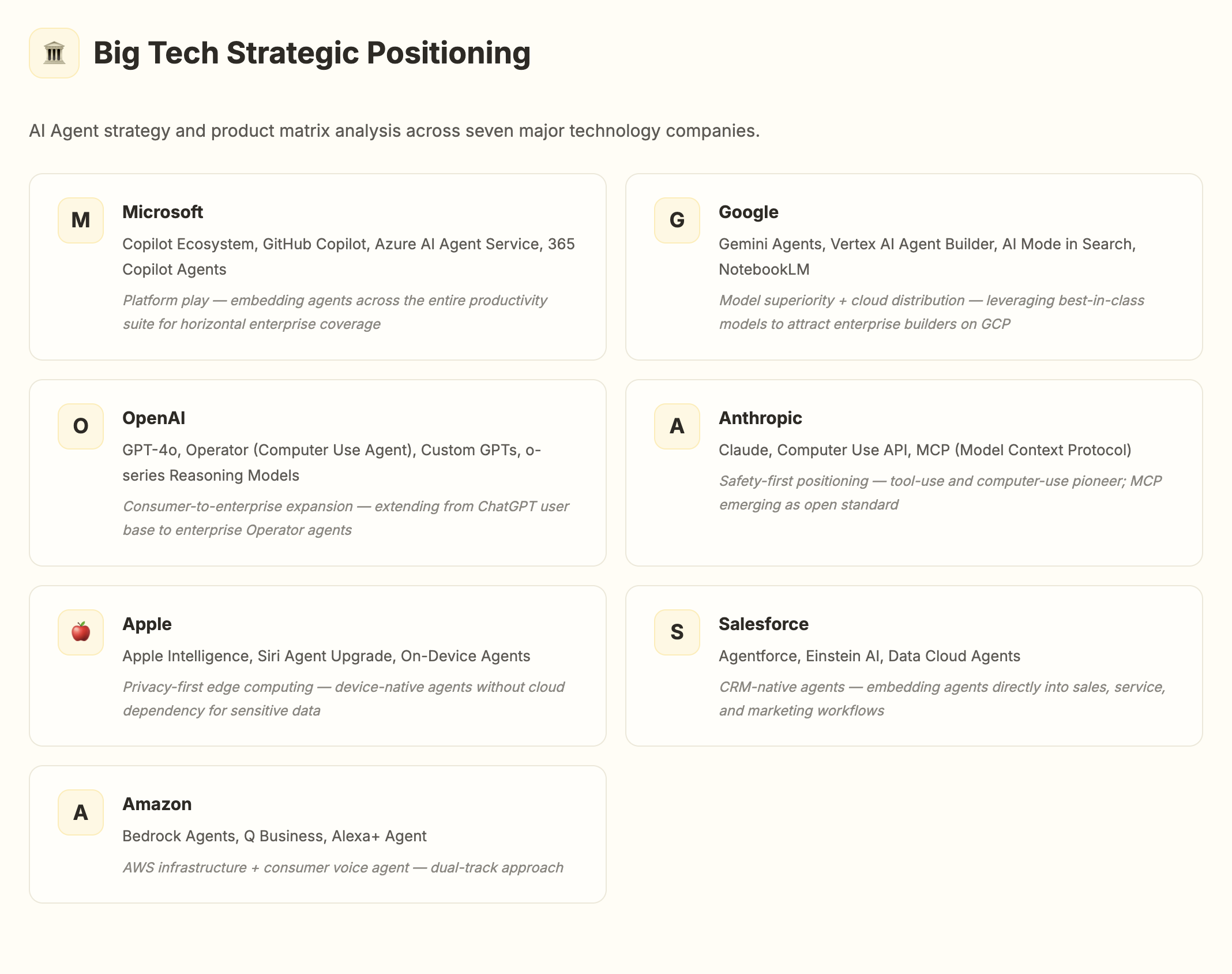
Once your framework is defined, you need to identify every competitor, adjacent player, and emerging threat worth monitoring. This goes beyond the three to five direct competitors your team already knows.
Sai automates landscape mapping by searching Google for your target keywords, visiting the top 20 organic results and paid advertisers, extracting company names and positioning statements, checking G2 and Capterra for category leaders, and scanning LinkedIn for companies hiring in your space. The output is a competitor matrix in Google Sheets with columns for company name, website, positioning statement, target market, pricing tier, estimated company size, and monitoring priority.
For this article's target keyword -- "ai market research tool" -- the SERP shows Manus, Quantilope, AlphaSense, GWI, and Optimo competing organically, while AlphaSense, Swayable, Perplexity, and The Insights Company run paid ads. A manual analyst would spend two to three hours compiling this landscape. Sai does it in under ten minutes.
Step 3: Set Up Automated Competitive Monitoring
Static research becomes stale within weeks. The value of AI market research is continuous monitoring -- detecting changes as they happen rather than during quarterly review cycles.
Sai sets up automated monitoring workflows for each high-priority competitor:
Website change detection: Sai visits competitor pricing pages, feature pages, and product announcements on a scheduled cadence (daily, weekly, or custom). It extracts the current content, compares it against the previous snapshot stored in your Google Sheet, and flags any changes with timestamps and before-after comparisons.
Social and review monitoring: Sai searches Reddit, X, LinkedIn, and G2 for mentions of competitor names and product categories. It captures post text, engagement metrics, sentiment signals, and direct URLs -- feeding everything into a dedicated "Market Signals" tab.
Hiring and expansion signals: Sai checks competitor LinkedIn pages and job boards for new postings. A sudden surge in engineering hiring, a new VP of Sales, or job descriptions mentioning a new market segment are all leading indicators of strategic direction.
This is where the difference between an AI market research tool and an AI market research agent becomes clear. Tools give you a dashboard to check. Agents give you a workflow that runs itself and alerts you when something matters.
Step 4: Run Cross-Platform Trend Analysis
Individual data points become strategic insights only when you connect signals across platforms. A negative review trend on G2 means one thing. That same trend combined with a competitor's hiring freeze, a pricing increase, and declining social engagement tells a much more complete story.
Sai runs cross-platform trend analysis by querying multiple sources simultaneously for a given topic or competitor. It searches Google News for recent coverage, Reddit for community sentiment, X for real-time reactions, LinkedIn for thought leadership and company announcements, and industry publications for analyst perspectives. The output is a structured trend report that synthesizes signals across all channels, identifies consensus themes, flags contradictions worth investigating, and provides specific source URLs for every claim.
For sales teams, this cross-platform view is particularly valuable when combined with lead enrichment. If Sai identifies that a competitor just raised prices or received negative press, your sales reps can reference that intelligence in their follow-up emails and LinkedIn outreach the same day.
Step 5: Build SWOT Analyses and Competitive Dossiers
Raw data needs synthesis to be actionable. SWOT analyses, competitive battle cards, and market dossiers are the deliverables that decision-makers actually use -- but they traditionally take analysts days to produce.
Sai automates dossier generation by aggregating all collected intelligence for a given competitor or market segment and structuring it into a standard framework:
Strengths: verified competitive advantages based on product features, pricing, market share, customer reviews, and brand recognition
Weaknesses: validated vulnerabilities based on negative reviews, customer complaints, product gaps, and pricing concerns
Opportunities: market gaps, underserved segments, emerging trends, and competitor missteps your team can exploit
Threats: competitive moves, market shifts, regulatory changes, and technology disruptions that require defensive planning
Each finding in the dossier links to its source URL, includes the date collected, and carries a confidence rating based on how many independent sources corroborate it. This is not a generic AI summary. It is a verified intelligence product with an auditable evidence chain.
Step 6: Feed Research Into Your Sales and Outreach Workflow
The final and most valuable step is connecting your competitive intelligence directly to revenue-generating activities. This is where most market research workflows end (the report gets filed) and where Sai's workflow continues.
Sai creates direct bridges between your research outputs and your sales workflow:
Pre-meeting briefs: Before every scheduled meeting, Sai pulls the latest competitive intelligence relevant to the prospect's industry and known competitors, generating a one-page briefing document in Google Docs.
Outreach personalization: When Sai identifies that a prospect's current vendor just raised prices or received negative reviews, it flags the prospect for timely sales outreach with messaging that references the competitive shift.
Battle card updates: Sai automatically updates your competitive battle cards in Google Sheets whenever it detects a significant change in competitor positioning, pricing, or product features -- ensuring your sales team always works with current intelligence.
This research-to-action pipeline is the critical gap that separates AI market research tools from AI market research workflows. Tools produce reports. Workflows produce revenue.
Stop doing repetitive tasks. Let Sai handle them for you.
Sai is your AI computer use agent — it operates your apps, automates your workflows, and gets work done while you focus on what matters.

.svg)


.svg)